King of the Hill Season 14 Review: Hulu Original

An older Peggy, Bobby, and Hank pose in front of their fence.

For the first time since 2009, the Hill family is back on our television screens. In August, Hulu released the 14th season of King of the Hill, an adult animation series that originally aired on Fox. Jumping roughly nine years in the future, we pick back up to the Hill family in the current age, watching Hank and the gang navigate ride-share apps, cancel culture, and internalized misogyny. 

For those who need a refresher, the original series was focused on Hank Hill, a propane salesman, living in Arlen, Texas. He’s married to Peggy, a substitute teacher, and has one child, a boy named Bobby. He’s an avid fan of beer, grilling, and hanging out in the alley with his best friends since childhood – Dale, Bill, and Boomhauer. 

Bobby, Hank, Peggy, Luanne, and Lady Bird

In the original series, we also follow the adventures of Hank’s niece Luanne, his mother Tilly, and his father Cotton. The Souphanousinphones family, who live next door, is another prominent part of the show, consisting of Kahn, Minh, and Connie. Laotian-American, Khan and Minh both consider themselves socially above their neighbors, but slowly build a friendship over the series. Connie and Bobby are close friends, eventually becoming (on and off again) girlfriend and boyfriend. 

There are countless other side characters who are prominent in the show. Nancy and Joseph, Dale’s wife and son, are friends with Peggy and Bobby. Hank’s boss, Buck Strickland, causes chaos both at work and at home for the Hill family. Ted and Cindy Wassonasong are affluent members of the Arlen community who hold the keys to the Nine Rivers Country Club that Kahn and Minh are desperate to join. I could list these characters for days, and they’re all important in their own way. I’m personally biased to enjoying plots that include Luanne and the Souphanousinphones family. 
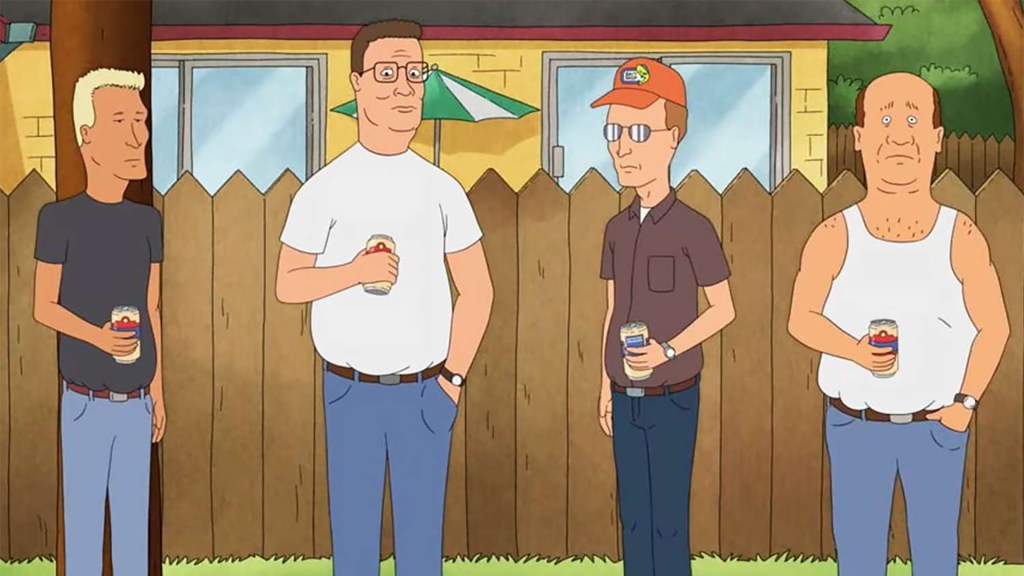
Boomhauer, Hank, Dale, and Bill in the back alley
Boomhauer, Hank, Dale, and Bill drinking beer in the back alley

The original series aired from 1997-2009. Though I consider myself a (literal) day one watcher of similar shows like The Simpsons, I don’t remember ever sitting down with my parents to watch a new episode of King. That said, I know that I had to have tuned in for episodes here and there, because there was a shocking amount from the series that I remembered. I just needed to jog my memory! For this review, I went back and watched episodes from seasons 5-9. There were multiple times, particularly in season 6, that I went “oh, I remember this!” From Bobby’s  iconic “that’s my purse” scene to Boomhauer sobbing to Heart as he drove away from a failed proposal, I found myself remembering more from the series than I ever thought I could. 

I’ve spoken to multiple people in my life who were original King watchers and were hesitant about watching the revival. Some people worried that the show would be watered down or that the original tone would be impossible to replicate. Other people were put off by the new animation or found that the show had written off too many important characters. I don’t blame original fans for their hesitation. I’m a fan of many older shows that constantly tease a reboot – One Tree Hillwas one of my favorite shows growing up, and I am hesitant about the reported revival in the works at Netflix. That said, I knew that I wanted to give King a chance. What can I say, I’m too big of an adult animation fan to let an event like this pass me by. 

The first episode of the 14th season opens with our favorite propane salesman and substitute teacher coming home to Texas after years of living in Saudi Arabia. Initially thrilled to be home and reunite with their friends, the couple is concerned that they made the wrong choice in moving back to Texas. Too much had changed since they were home last, and they’re concerned that they no longer have a place in Arlen. We jump between their struggles and check in on our beloved Bobby. Bobby is absolutely crushing it as the head chef and co-owner of a Japanese-German fusion restaurant called Robata Chane. He is happy, fulfilled, and feels successful… most of the time. Bobby is still young, and he spends this first episode wondering if he missed out by not attending college like his peers in their early 20s. 

Hank, Brian, Boomhauer, and Dale stand in front of the back alley fence.
Hank, Brian, Boomhauer, and Dale enjoy coffee in the back alley

I really enjoyed this first episode. I think it was a great call by the writing team to have the Hill family be in a transition period at the beginning of the new series. The time jump was also a brilliant idea – I’m so glad that they didn’t feel the need to keep Bobby 13 forever. Seeing the characters aged up is a little jarring at first, but believe me, their attitudes are the same. These are the same characters we know and love, just with a *tiny* bit more wisdom. 

The rest of the season follows the Hill family and inner circle get into their typical shenanigans – Bobby and Hank both enter a beer brewing competition, Peggy builds a neighborhood free little library that goes horribly wrong, Khan and Minh show up for a very memorable anniversary party, Bobby is accused of cultural appropriation, and Hank discovers that Bobby is using charcoal for his restaurant, instead of propane. *shudders*

Dale, Bill, Boomhauer, Peggy, and Hank in Boomhauer's living room
Dale, Bill, Peggy, and Hank nurse Boomhauer after a Task Rabbit, I mean Chore Chimp, job gone wrong.

Clocking in at 10 episodes, this new season is a quick and easy watch. I do hope that the following seasons will be a little longer – I wanted to spend more time with these characters! Due to this small season, we don’t see nearly enough of some fan favorite side characters. I don’t think there’s enough time spent on Hank’s friend group – I wanted to see even more of Dale, Bill, and Boomhauer. They each get one memorable plot line for the season, but I know that if we had 22 episodes, we could have gotten even more. 

That said, the new season does spend a lot of time with my favorite character, Bobby. I think it’s so much fun to keep up with adult Bobby. To see this once clumsy, class clown, goofy boy transform into a competent businessman and chef? I’m obsessed. Outside of his business, Bobby spends a lot of time in this season trying to define his relationship with Connie. Are they just friends? Childhood sweethearts destined to be together again? Neither he nor Connie is sure during the first nine episodes of the season. I’ll let you watch for yourself to see where they land in episode 10. 😉

Adult Connie and Bobby at karaoke
Adult Connie and Bobby at karaoke… as “just friends”

Tragically, multiple original voice actors had already passed away prior to or passed away during the recording of the new season. Brittany Murphy voiced Luanne, who is nowhere to be seen in season 14. Tom Petty voiced Lucky, Luanne’s partner, who is also not in the season. Johnny Hardwick was the voice of Dale and passed away during the recording of season 14. Toby Huss, a voice actor who already voiced multiple characters in the show, was appointed as the new voice of Dale. This caused quite a stir in the King fandom, but I truly couldn’t tell which voice was which. Finally, Jonathan Joss, the voice of John Redcorn, was killed after season 14 had finished recording. They have yet to announce what will be done with Redcorn for the upcoming season. 

All in all, I believe that the 14th season of King of the Hill was well done. As far as reboots have gone, this season is a stellar example of how to do one correctly. Give the audience time to refamiliarize themselves with the characters, show us how they’re doing in the current world, then create a little bit of chaos. The voice acting is tight, the plots are the right balance of grounded and outrageous, and, most importantly, the characters feel like themselves. This new season fits in right alongside the previous 13. 

Bravo to the entire King of the Hill cast and crew for a satisfying and hilarious comeback to the adult animation world. We missed you, Hank & Co. 
Running Point Season 1 Review: Netflix Original

This review contains spoilers.

The latest addition to the Mindy Kaling Television Universe landed on Netflix last week, and it’s called Running Point. Starring Kate Hudson, the sports-comedy series was co-created by Kaling, Ike Barinholtz, and David Stasse. The trio took over the production from the original creator, Elaine Ko. The show is loosely based on the life of Jeanie Buss, the controlling owner and president of the Los Angeles Lakers. 

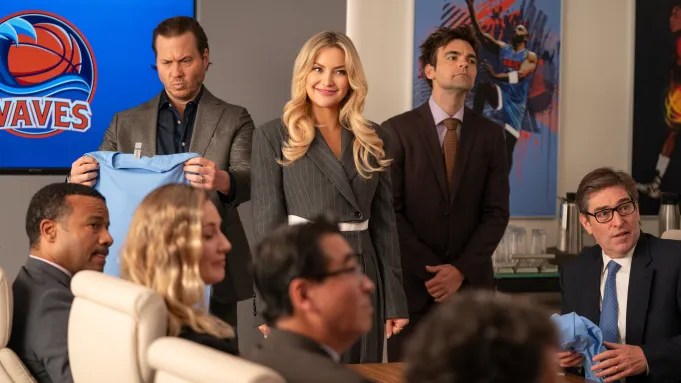
The series follows Hudson as she plays Isla, a reformed party girl and only daughter of the famous Gordon family as she is appointed the president of the (fictional) Los Angeles Waves following her eldest brother, Cam’s, arrest and rehab stint. Hudson is joined by Brenda Song (Ali), Justin Theroux (Cam), Drew Tarver (Sandy), Scott MacArthur (Ness), and Fabrizio Guido (Jackie) as her best friend/chief of staff, three brothers, and (revealed at the end of the pilot) secret half-brother, respectively. 

The series was given the (apparent) max number of episodes a streaming show can have these days, 10, and I believe they use all 10 episodes wisely. The show’s pace is impeccable, jumping from plot to plot well. I was immediately a little skeptical of the show because I was wary of watching a sports-comedy version of Succession. I wasn’t interested in watching the privileged (white) Gordon siblings fight over control of a basketball team. But my skepticism was proven wrong by episode 2, as Sandy and Ness jointly attempt to overthrow Isla and are comically shut down by a series of smart business moves by the president herself. From there, the conflicts within the team are about everything except trying to oust Isla, which I appreciated. 

I was pleasantly surprised by how the show handled Guido’s character, Jackie. As the secret love child of the deceased Gordon, Jackie isn’t even aware that he’s a biological Gordon until the end of the pilot. His mother, one of the Gordon family’s former housekeepers, recently passed away and ensured that his biological father wouldn’t be revealed to him until her death. The kicker? Jackie begins the series as a concessions worker for the Los Angeles Waves.  

This plot could have easily gone so wrong. In the wrong hands, it would have been insensitive and perpetuated harmful stereotypes. Does anyone else remember the Arnold Schwarzenegger scandal? Just me?) But the RP writing team treats the complex topic with care. While Jackie is initially presented with a $2 million payday if he signs an NDA and agrees to never pursue a relationship with any member of the Gordon family, he doesn’t want to sign it. After the death of his beloved mother, he wants to get to know his biological family. The Gordon siblings initially reject him and only show up to an in-person meeting to get Jackie to sign the deal. Naturally, Isla breaks first and tells Jackie not to sign the deal. Jackie then joins the family business alongside his siblings – he’s once again working for the Waves, this time as Isla’s assistant. 

The series also features a Kaling universe favorite – a good old-fashioned love triangle. Isla is engaged to Dr. Lev Levenson (Max Greenfield), a kind and supportive pediatric doctor. They’ve had a long engagement (because of COVID and both of their mother’s getting facelifts, of course). In one scene we watch Isla talk through her work problems with Lev, and in the next, she is eyeing Waves head coach Jay Brown as he does (admittingly, impressive) pull-ups. The two men are mostly unaware of each other and don’t interact – I mean, Jay attends Isla and Lev’s engagement party in episode 5. So far in the series, this triangle only exists in Isla’s mind, but anyone who has seen a romance movie knows where this plot is going. 

Onto basketball. Let me preface this portion of the review by saying that I am not a big sports person. The only team I keep up with is my college alma mater, and that’s only for football. I don’t know much about basketball, but I’ve seen a lot of One Tree Hill, so I know what basketball should look like on screen. 

Four of our main characters: Isla, Sandy, Ness, and Ali

The team dynamic on RP is giving Ted Lasso. We have Toby Sanderman as Marcus, the star player who starts off the series as a Roy Kent shadow. Chet Hanks (yes, of THE Hanks family) is Travis, an obnoxious sexist but great player who has a strange amount of chemistry with Isla. Dane DiLiegro is Badrag, the player who gives us the most amount of funny one-liners. Honestly, the team plotlines are a little lacking. This is something that should be reworked in a potential second season. 

Ben Travers of IndieWire gave Running Point a C+ rating and pointed out that “a shocking number of Waves players look better suited for the NFL, but you’re able to suspend disbelief because you don’t have to see them hoop… until the finale decides to spend one-third of its run-time watching stiff and stout actors do their best impression of agile and altitudinous athletes.” I have to agree. When I saw that there were less than 10 minutes left of the season finale and the team was still playing, I knew we were in for a rushed ending. Chet Hanks isn’t even in the finale, dammit! 

If I were to go the IndieWire route, I would give the first season of Running Point a solid B. It’s fun, mostly silly, and has the perfect amount of drama. I like a lot of the cast, (Tarver is a particular favorite of mine from his last show, The Other Two) and I particularly like Hudson when she’s doing comedy. I love to see Song getting some airtime on a platform as big as Netflix. The writing is snappy and I was never outright bored during an episode. But there were some weak plotlines, great characters being brushed aside, (Max Greenfield, you deserved more screen time) and odd time jumps that briefly confused me. 

All that said, I’m looking forward to tuning in for a second season of Running Point. Netflix, hurry up and renew this, I know you want to. 

Catch the first season of Running Point, streaming on Netflix now.

Scott Pilgrim Takes Off: Netflix Original Show Review

This post contains spoilers for Scott Pilgrim Takes Off and Scott Pilgrim Vs. The World. 

I’m going to open this review with complete honesty – I wasn’t a fan of Scott Pilgrim Vs. The World

I know, I know. It’s a cult classic. I watched it for the first time in 2021 and found myself cringing more than anything else during it. I can’t exactly explain what I found so uninteresting about it, but I know that I didn’t like how Ramona Flowers was portrayed. The manic pixie dream girl of it all was a turn off for me. I was always glad that I had finally forced myself to watch it so I could participate in conversations about it, but I was certain that I wasn’t ever going to watch it again. 

When I heard that Netflix was releasing an anime version of the story this fall, I didn’t think much of it. However, I found myself interested in the concept once it became available to stream. Curiosity got the best of me, and I decided to sit down and try it out. And let me tell you…. Scott Pilgrim Takes Off is one of my favorite shows of 2023. 

But let’s back up. Scott Pilgrim Takes Off is, like the film, based off of the graphic novels written by Bryan Lee O’Malley. The first episode largely follows the film plot, with Scott dreaming of and then meeting Ramona, taking her on a date, falling asleep in her bed, etc. However, the show completely changes gears at the end of the first episode. You know how Scott is supposed to win the fight against Matthew Patel, defeating Ramona’s first evil ex? Well, he doesn’t. He dies. 

Or does he?

That is the mystery that the show sets out to solve. With Scott out of the picture, we follow Ramona as she skates around town, trying to find out where Scott really went. It’s a brilliant twist that I did not see coming. 

Ramona is a fantastic protagonist. The next few episodes open with a beautiful sequence of Ramona dying her hair a new color each morning, symbolizing where we’re going on the journey in the episode. Mary Elizabeth Winstead does great voice work opposite Aubrey Plaza, Alison Pill, Mae Whitman, Chris Evans, and Brandon Routh in these episodes. 

In these episodes, we watch Ramona track down each of her ex’s to see if they are the key to finding Scott. While confronting them, we’re treated to seeing Ramona make peace with each of them and come to terms with all that she had done to contribute to the downfall of each relationship. It’s great character development for everyone involved. 

I won’t spoil how the show ends, but I will say that it comes to a satisfying conclusion. The show is billed as a limited series and if this is the last we get of this iteration of Scott Pilgrim, I think fans will be pretty happy. 

I was shocked at how much I genuinely enjoyed this series. Honestly, it was the animation style that convinced me to give it a shot, and I’m glad I did. I’m an adult animation fan, but this is the first official anime I’ve ever watched. I really enjoyed the art style and will definitely check out more in the future.

I’ll end this review with a quick list of some of my favorite changes featured in the Scott Pilgrim show versus the film. 

  1. Ramona! She’s fully fleshed out in this show and skates straight away from the manic pixie dream girl trope. 
  2. KNIVES! Oh my gosh, what a badass. She has a fantastic plot where she ends up as a valued member of Sex Bob-omb, and it’s so fun to watch. I love that girl. 
  3. More Wallace! Who doesn’t love Wallace? Kieran Culkin is brilliant as Wallace and is featured in every episode. I love that man, and I love this character. 
  4. Less Scott —- SUE ME, I’M SORRY. 
  5. Better Scott —- The Scott we see is consistently sweet and treats Ramona (and Knives) as human beings. We love to see it. 

Have you watched Scott Pilgrim Takes Off? Were you a fan of this adaptation? Let me know in the comments!